Clara Krause · 26 September 2026
The Intersection of Note Clearing and Data Sovereignty Protocols in Cross-Border SaaS Operations
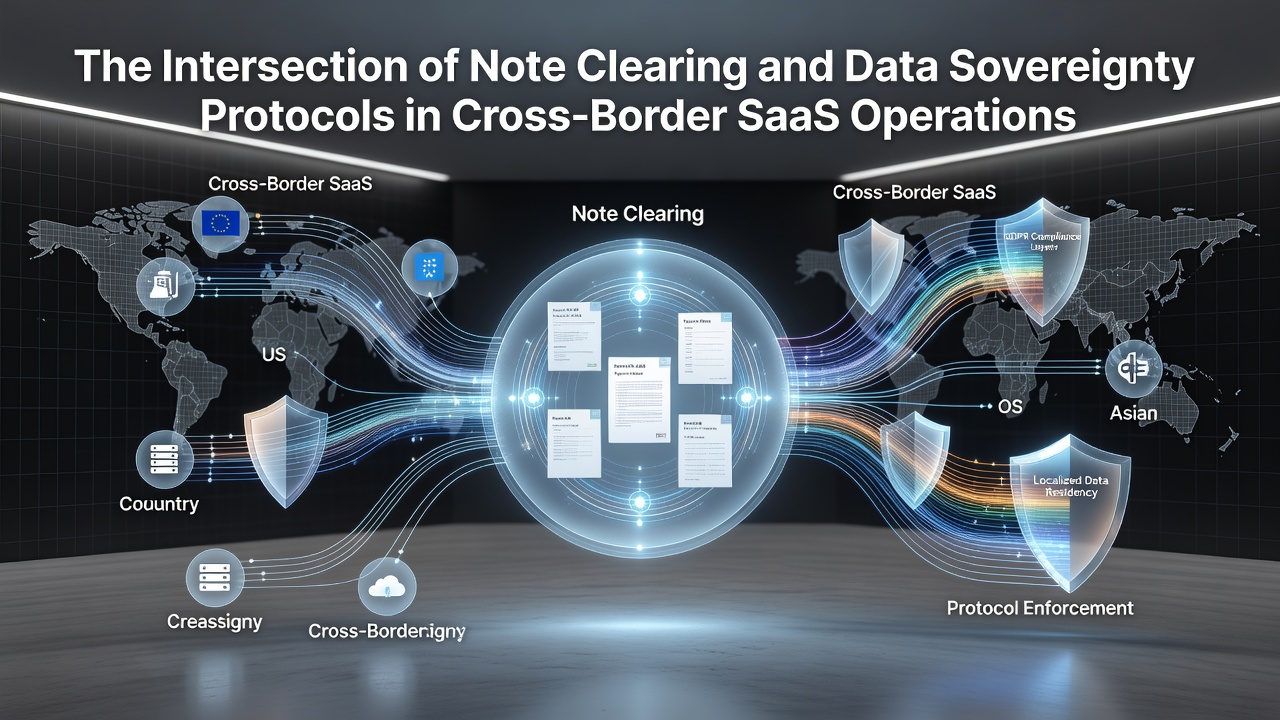
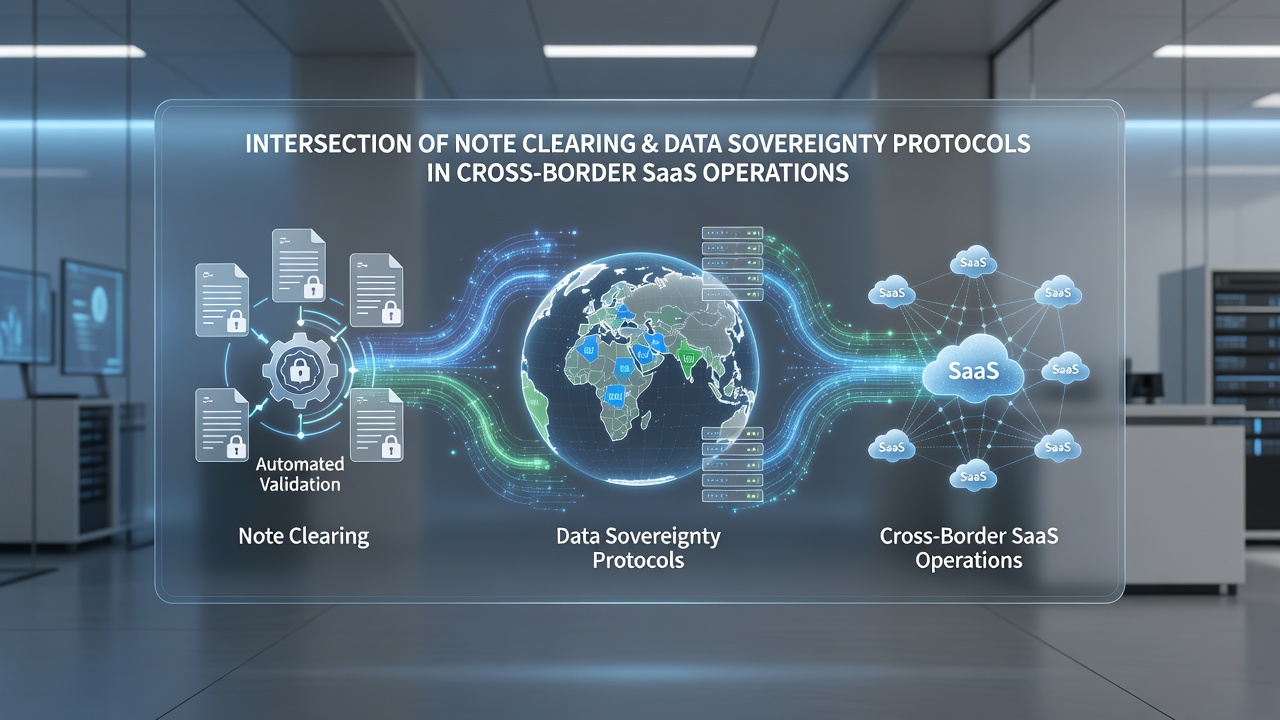
Cross-border SaaS platforms rely on note clearing mechanisms to process and reconcile transaction records while data sovereignty protocols dictate where and how those records can reside. These two systems intersect when companies transfer operational data between regions that enforce strict localization rules. Research from regulatory bodies shows that note clearing often involves temporary storage of metadata in intermediate servers before final settlement occurs.
Defining Note Clearing in SaaS Contexts
Note clearing refers to the structured validation and settlement of digital notes that represent user actions or financial entries within SaaS applications. In practice this process aggregates entries from multiple sources then applies reconciliation rules before archiving the results. Observers note that growing SaaS firms handle thousands of such notes daily across different time zones and compliance frameworks.
Data sovereignty protocols add layers of restriction by requiring that certain categories of information remain within designated national boundaries. Countries including Canada and Australia maintain frameworks that limit outbound transfers of personal or financial data without explicit safeguards. When note clearing pipelines cross these lines the clearing process must incorporate jurisdiction-aware routing to avoid violations.
How Sovereignty Rules Shape Clearing Workflows
Protocols such as those outlined in the Personal Information Protection and Electronic Documents Act require Canadian organizations to assess foreign jurisdictions before moving data. Similar provisions appear in Australian privacy legislation which emphasizes accountability for data once it leaves local control. SaaS operators integrate these checks into their note clearing sequences so that sensitive entries trigger localized processing paths rather than default global routes.
One study revealed that companies adopting automated sovereignty filters reduced compliance incidents by routing notes through approved regional nodes. This approach uses geofencing at the application layer to determine storage locations before any clearing step begins. Figures from industry reports indicate that such configurations add measurable latency yet maintain throughput when properly architected.
Technical Integration Points
Clearing engines connect with sovereignty modules through API endpoints that query location policies in real time. These modules reference updated regulatory lists to classify each note according to content type and origin. When a note contains elements subject to localization the system diverts it to an in-region clearing queue instead of a centralized one.
September 2026 marks the scheduled review period for several multilateral data transfer agreements that could alter permitted clearing destinations for SaaS providers operating between North America and Asia-Pacific regions. Updates from the Asia-Pacific Economic Cooperation forum and the Office of the Privacy Commissioner of Canada are expected to influence how clearing systems validate cross-border flows during that timeframe.
Regulatory Examples Across Regions
European frameworks emphasize purpose limitation and storage minimization which directly affect how long cleared notes can persist in any single location. Providers therefore implement automated deletion timers aligned with sovereignty requirements. In contrast Singapore's Personal Data Protection Act focuses on consent mechanisms that clearing systems must verify before archiving notes that include user identifiers.
Those who manage multi-region SaaS infrastructures report that unified logging becomes essential when notes move through both localized and shared environments. Centralized dashboards aggregate status without storing the underlying note content outside permitted zones. This separation keeps clearing operations efficient while satisfying audit trails demanded by oversight bodies.
Operational Challenges and Solutions
Latency arises when sovereignty checks insert additional hops into clearing pipelines yet engineers mitigate this through edge-based policy caches. These caches refresh periodically from authoritative regulatory feeds to reflect the latest restrictions. Evidence suggests that well-tuned caches keep added delay under acceptable thresholds for most SaaS use cases.
Another consideration involves encryption key management since sovereignty rules sometimes extend to control over decryption capabilities. Clearing platforms that support bring-your-own-key models allow clients to retain sovereignty over access while still benefiting from remote processing services. Academic papers on distributed key systems document successful deployments of this pattern in financial SaaS environments.
Conclusion
The intersection of note clearing and data sovereignty protocols continues to evolve as regulatory landscapes shift and SaaS adoption expands globally. Organizations that embed location-aware logic into their clearing workflows position themselves to handle cross-border operations without compromising compliance. Data from multiple jurisdictions shows that proactive integration of these requirements reduces friction during audits and supports smoother scaling across regions. As new review cycles approach in 2026 providers will likely refine their systems further to align with updated transfer standards.