
Gisela Powell · 10 October 2026
Navigating Data Flow Optimization in Enterprise Application Networks Through Advanced Clearing Protocols
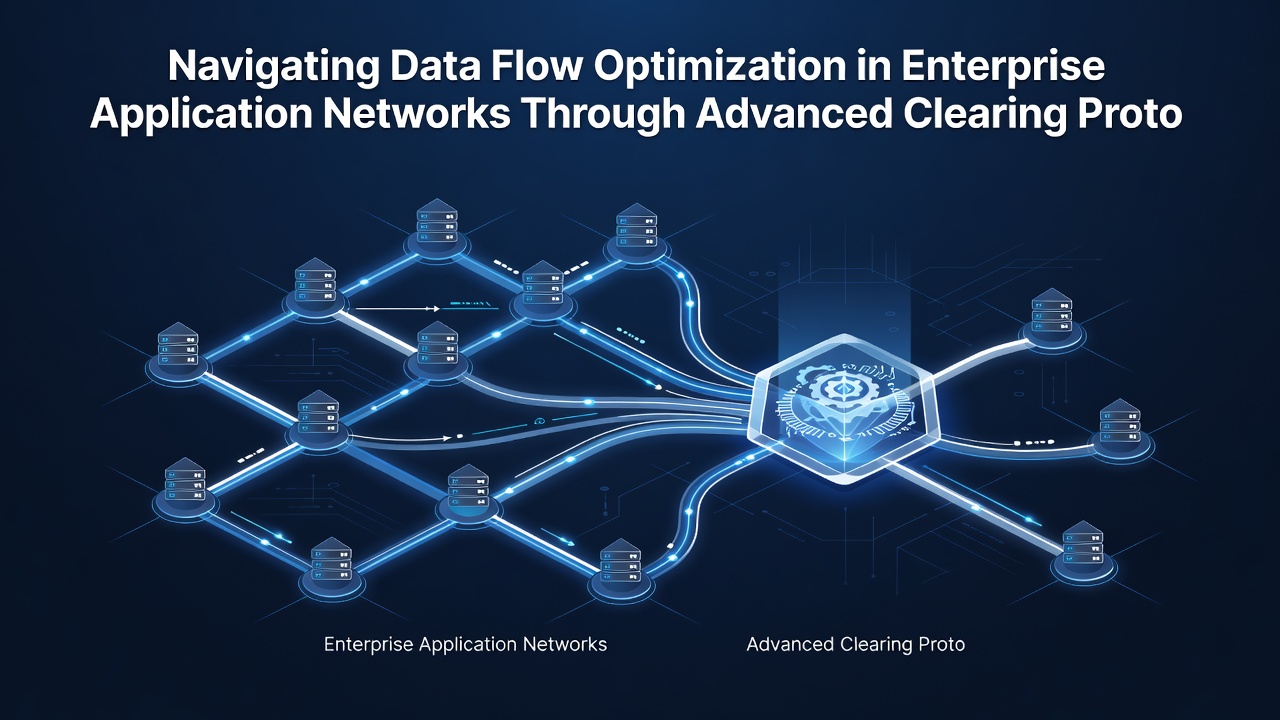
Enterprise application networks handle massive volumes of data that move between systems, departments, and external partners every day, and advanced clearing protocols have emerged as tools that manage this movement by validating, routing, and reconciling information before it reaches its destination. These protocols operate at multiple layers of the network stack, checking data integrity while reducing redundancy and latency in ways that traditional routing methods often overlook. Observers note that organizations adopting these approaches see measurable improvements in throughput, particularly when applications span cloud environments and on-premises infrastructure.
Core Mechanisms Behind Clearing Protocols
Advanced clearing protocols function through a series of verification steps that examine packet headers, payload content, and metadata against predefined rules before allowing data to proceed. Researchers have documented how these checks identify duplicate entries, flag inconsistencies, and apply compression techniques that shrink transmission sizes without losing essential details. In practice, the process begins at edge nodes where incoming streams are sorted by priority and destination, then continues through central clearing points that maintain synchronized logs across distributed systems. Data indicates that this layered approach prevents bottlenecks that arise when high-volume applications compete for bandwidth during peak periods.
One study from a North American research institution highlighted how protocol engines maintain state tables that track active sessions, allowing them to reroute traffic around congested segments automatically. This capability becomes especially useful in environments where applications exchange structured records such as financial transactions or customer profiles, since the clearing layer can enforce consistency checks in real time rather than after delivery. Figures from industry reports show that organizations implementing these protocols reduced retransmission rates by measurable margins compared with standard TCP-based flows.
Integration Patterns Across Enterprise Environments
Enterprises integrate clearing protocols into existing application networks by deploying them as middleware components that sit between legacy systems and modern microservices architectures. The protocols translate between different data formats while enforcing access policies that align with internal governance requirements. Those who have studied deployment patterns report that successful integrations often start with pilot segments covering a single business unit before expanding to the full network, allowing teams to calibrate rule sets based on observed traffic patterns.
In October 2026, updates to cross-border data handling frameworks prompted several multinational firms to adjust their clearing configurations to meet new documentation standards that emphasize audit trails for every cleared transaction. These changes coincided with releases of updated software libraries that support both IPv4 and IPv6 environments, giving network architects flexibility when extending clearing functions to remote offices. What's interesting is how these updates also incorporated machine learning models that refine routing decisions over time by analyzing historical flow data.
Performance Metrics and Measurement Approaches
Quantifying the impact of advanced clearing protocols requires tracking metrics such as end-to-end latency, packet loss rates, and resource utilization across both physical and virtual infrastructure. Network teams collect these measurements through centralized dashboards that aggregate logs from multiple clearing nodes, then compare baseline figures against post-implementation results. According to documentation from a European standards body, organizations that maintained consistent measurement programs identified optimization opportunities that reduced overall data movement costs by significant percentages over twelve-month periods.
Additional data from Australian government technology assessments revealed similar patterns in large-scale deployments where clearing protocols handled mixed workloads including real-time analytics and batch processing. The assessments noted that protocol tuning sessions, conducted quarterly, helped sustain performance gains as application demands evolved. Observers point out that these regular reviews also surfaced opportunities to consolidate redundant data stores that had accumulated over years of organic growth.
Security and Compliance Considerations
Clearing protocols contribute to security postures by inspecting data for anomalies before forwarding occurs, which adds a checkpoint that complements traditional perimeter defenses. Compliance teams map protocol rules to regulatory requirements such as those outlined in frameworks from Canadian federal agencies, ensuring that cleared data meets retention and access standards. Research indicates that this mapping process becomes more straightforward when protocols maintain detailed logs that record every validation step and routing decision.
Enterprises operating in regulated sectors often combine clearing functions with encryption at rest and in transit, creating layered protections that address both operational efficiency and data protection mandates. Those who've examined audit outcomes report that the presence of verifiable clearing records simplifies responses to external reviews, since each data movement carries documented evidence of policy adherence.
Conclusion
Advanced clearing protocols continue to shape how enterprise networks manage data movement by introducing structured validation and routing steps that address volume, consistency, and compliance simultaneously. Organizations that track performance through ongoing measurement programs position themselves to adapt as traffic patterns shift and regulatory expectations evolve. The developments observed through late 2026 underscore the ongoing refinement of these tools within complex application environments.